
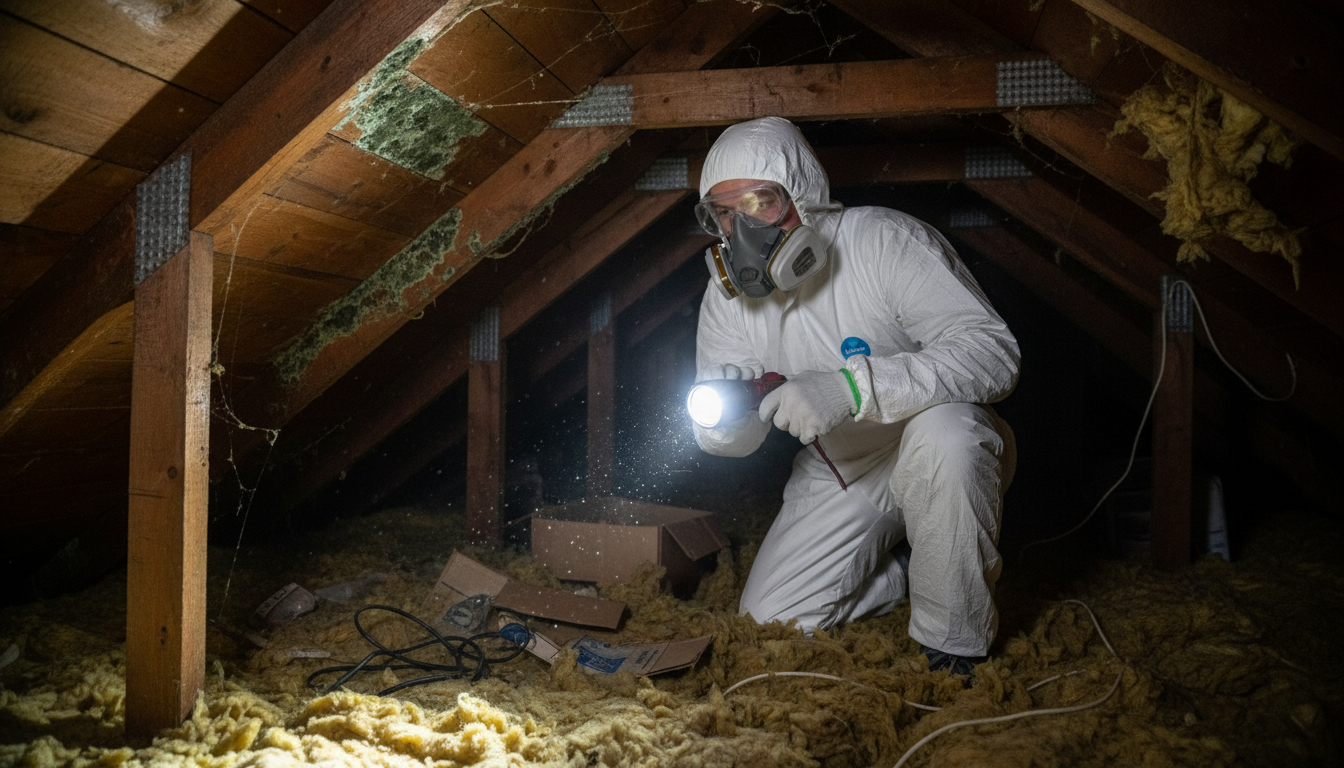
Attic & Crawl Space Mold Treatment in Houston, TX
Targeted mold treatment for Houston attics, crawl spaces, and ventilation systems. We access the hardest-to-reach areas of your home where mold grows undetected for years.
Attics and crawl spaces are where Houston's climate does its worst work on residential structures — and where mold grows longest without detection. These spaces combine every ingredient mold needs: heat, moisture, organic building materials, and darkness. In a Houston attic, summer temperatures routinely exceed 140°F, and when that superheated air meets cooler surfaces (AC ductwork, roof sheathing on a rainy day, the top side of insulation), condensation forms and feeds mold colonies that can cover hundreds of square feet before anyone in the living space below notices a problem.
Why Houston Attics and Crawl Spaces Are Mold Hotspots
Houston attics face a unique thermal and moisture dynamic. The combination of extreme summer heat, high outdoor humidity, and air-conditioned interior spaces creates a condensation engine. When humid outdoor air infiltrates the attic through soffit vents, ridge vents, or gaps in the building envelope, it hits the relatively cooler surface of AC supply ductwork and the underside of roof sheathing during rain events. This condensation saturates wood sheathing, insulation, and framing — and in Houston's heat, mold can colonize that wet material within days.
Poor attic ventilation makes the problem dramatically worse. Many Houston homes — particularly those built in the 1970s through 1990s — have inadequate soffit-to-ridge ventilation that allows hot, humid air to stagnate in the attic space. Bathroom exhaust fans vented into the attic rather than through the roof (a building code violation that remains common in older Houston homes) dump moisture-laden air directly into the space. We find mold growing on roof sheathing, on and behind insulation, on the top plates of interior walls, and on AC ductwork in these under-ventilated attics.
Crawl spaces under pier-and-beam Houston homes face the opposite problem: ground moisture migrating upward. Houston's clay soils hold water from the surface down, and that moisture evaporates into the crawl space as water vapor. Without a properly installed vapor barrier on the ground surface, humidity in a Houston crawl space can exceed 90% year-round. Floor joists, subfloor sheathing, plumbing, and HVAC ductwork routed through the crawl space all become mold colonization surfaces. The result is mold growing directly beneath your living space, with spores migrating upward through gaps in the subfloor, around plumbing penetrations, and through the HVAC system.
Need Attic & Crawl Space Mold Treatment? Call Now.
Same-day assessment available for Houston and surrounding areas.
Our Attic & Crawl Space Mold Treatment Process
Access & Inspection
Our technicians access the attic or crawl space and conduct a thorough visual and instrumental inspection. We use moisture meters to map wet areas, thermal imaging to identify condensation patterns, and document the extent of mold growth on sheathing, framing, insulation, and ductwork. We also identify the moisture source — ventilation deficiency, exhaust fan problems, vapor barrier failure, or building envelope issues.
Contaminated Material Removal
Mold-contaminated insulation (the most common casualty in Houston attics) is removed and bagged for disposal. Fiberglass batt insulation that has become a mold growth medium cannot be cleaned — it must be replaced. We also remove any mold-damaged cardboard, stored items, or debris that are contributing to the problem.
Surface Treatment & Media Blasting
Wood roof sheathing, rafters, joists, and other structural surfaces are treated using a combination of HEPA vacuuming, wire brushing, and soda media blasting to remove surface mold growth. We then apply an EPA-registered antimicrobial solution that kills remaining mold and provides residual protection against regrowth.
Encapsulation & Moisture Control
For crawl spaces, we install a heavy-duty vapor barrier (minimum 12-mil polyethylene) over the ground surface, sealed at seams and anchored to foundation walls. For attics, we address ventilation deficiencies — correcting improperly vented exhaust fans, adding soffit or ridge ventilation, and sealing air leaks from the conditioned space below. These moisture control measures are essential to preventing regrowth.
Insulation Replacement & Clearance
After treatment and moisture control measures are in place, we replace removed insulation with new material. For attics, we can install blown cellulose, fiberglass, or spray foam depending on your needs and budget. Final clearance inspection confirms all mold has been removed and moisture levels are within acceptable range.
The Hidden Cost of Ignoring Attic and Crawl Space Mold
Attic and crawl space mold in Houston homes is often discovered during real estate transactions when a home inspector checks these spaces — sometimes revealing mold growth that has been progressing for years. At that point, the remediation cost is typically $3,000-$10,000 depending on the extent of growth, and it becomes a negotiation point that can delay or kill a sale. We handle dozens of pre-sale attic and crawl space mold treatments every year for Houston-area homeowners and real estate agents who need the problem resolved quickly and documented for the buyer's lender.
Beyond property value, attic and crawl space mold directly affects indoor air quality. The stack effect — warm air rising through a building — pulls air from crawl spaces upward through the living space. HVAC supply and return ductwork routed through moldy attics or crawl spaces distributes mold spores throughout the home every time the system cycles. If your household is experiencing unexplained allergies, respiratory irritation, or persistent musty odors, the source may be a mold colony in a space you never enter.
Houston's climate means that attic and crawl space mold will not resolve on its own. Unlike cooler, drier climates where seasonal changes can slow or kill mold growth, Houston's year-round warmth and humidity sustain mold colonies indefinitely. Without treatment and moisture control, the problem only gets worse — and more expensive to fix — over time.
Frequently asked questions
How do I know if I have mold in my attic or crawl space?
Common signs include musty odors in upper-floor rooms (attic mold) or ground-floor rooms (crawl space mold), unexplained allergy symptoms that worsen at home, visible dark staining on attic sheathing or crawl space joists, and condensation on attic ductwork or crawl space pipes. However, many Houston homeowners discover the problem only during a home inspection or when they enter these spaces for maintenance. If your home is more than 10 years old and you have never inspected these areas, we recommend a professional assessment.
Can attic mold spread to the rest of my house?
Yes. Mold spores from attic colonies travel into living spaces through HVAC ductwork routed through the attic (which is standard in most Houston homes), through recessed light fixtures and attic hatches, and through gaps around plumbing and electrical penetrations in the ceiling. Every time your AC system cycles, it can pull attic air — including mold spores — into your ductwork and distribute them throughout your home.
How much does attic or crawl space mold treatment cost in Houston?
Attic mold treatment in Houston typically ranges from $2,000-$8,000 depending on the attic size and extent of mold growth. Crawl space encapsulation and mold treatment ranges from $3,000-$12,000 depending on the crawl space size and whether a full vapor barrier installation is needed. These costs include material removal, surface treatment, insulation replacement, and moisture control measures. We provide a detailed written estimate after inspection.
Will fixing the mold also fix the moisture problem, or are those separate?
They are related but separate. Mold remediation removes the existing mold growth, but if the moisture source is not corrected, regrowth is inevitable — especially in Houston's climate. Our treatment process includes identifying and addressing the moisture source: improving ventilation, correcting vented exhaust fans, installing vapor barriers, or sealing air leaks. We treat the mold and the cause together so you get a lasting solution, not a temporary fix.
Request a Free Assessment
Describe your mold situation and we’ll get back to you within the hour. For emergencies, call (281) 306-5175 for immediate response.