
Mold Inspection & Testing in Houston, TX
Professional mold inspections with infrared thermal imaging, air quality sampling, surface testing, and certified lab analysis. Know exactly what you are dealing with before you spend a dollar on remediation.
Not every mold problem is visible. In Houston's humid climate, mold frequently grows behind walls, above ceiling tiles, beneath flooring, and inside HVAC systems — places you cannot see or smell until the colony is well established. A professional mold inspection answers the two questions that matter most: do you actually have a mold problem, and if so, how bad is it? The answers determine whether you need a simple cleanup, a full remediation, or nothing at all.
What a Professional Mold Inspection Covers
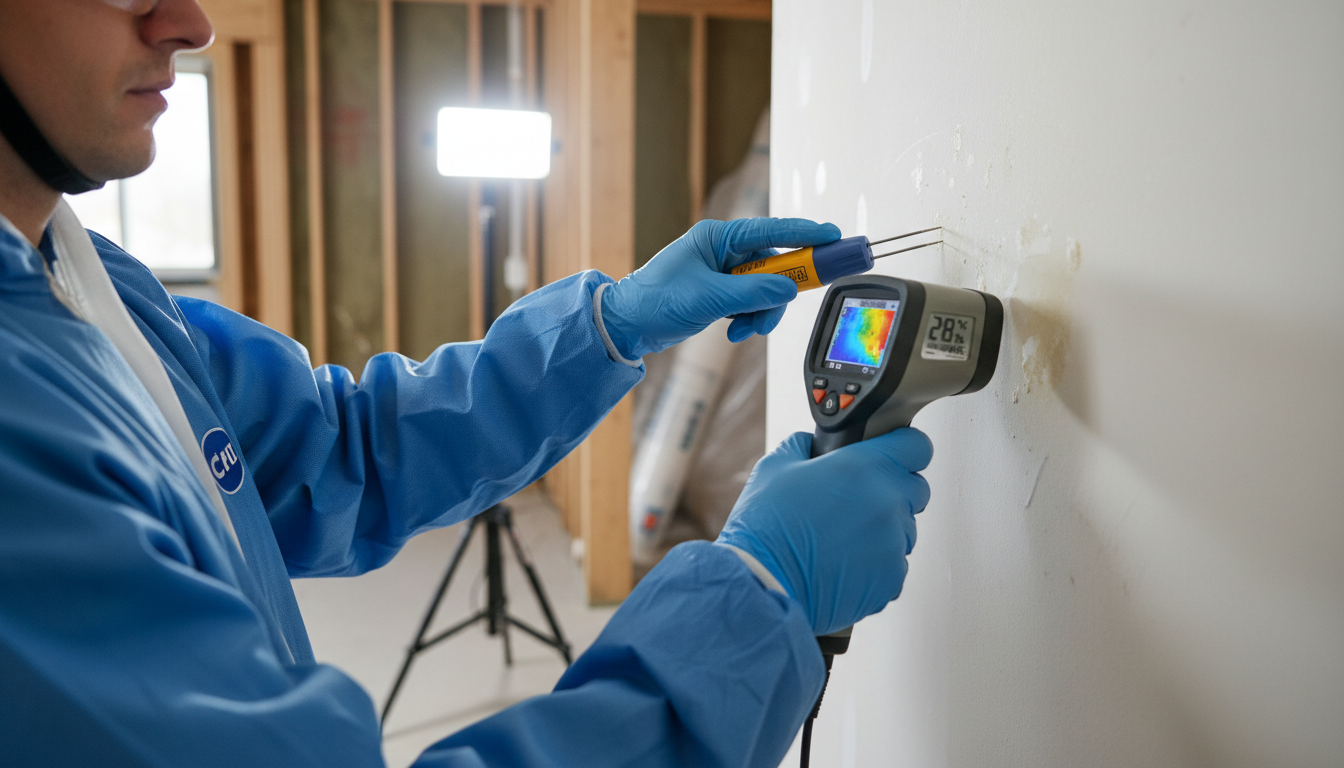
A mold inspection is not a visual walk-through with a flashlight. Our certified inspectors use diagnostic tools that reveal what the naked eye cannot. Infrared thermal cameras detect temperature anomalies in walls, ceilings, and floors that indicate hidden moisture — the precondition for mold growth. Pin-type and pinless moisture meters measure actual moisture content in building materials, distinguishing between a dry stain from an old leak and an active moisture source feeding current mold growth.
Air quality sampling is the gold standard for quantifying mold contamination. We collect air samples from inside the property and from outdoors (as a baseline control), then send them to an AIHA-accredited laboratory for analysis. The lab report identifies mold species present and their concentration levels, telling you not just that mold exists but whether the indoor levels are elevated above what is normal for the Houston area. This matters because Houston's outdoor mold counts are naturally high — a positive test alone does not mean you have a problem; the comparison to outdoor levels does.
Surface sampling complements air testing when visible growth is present. Tape-lift samples, swab samples, or bulk material samples are analyzed to identify the specific mold species growing on a surface. This is particularly important when dark-colored mold is found, as it determines whether the growth is common Cladosporium (nuisance-level) or Stachybotrys chartarum (the toxic black mold that demands Level 3 containment protocols).
Need Mold Inspection & Testing? Call Now.
Same-day assessment available for Houston and surrounding areas.
Our Mold Inspection Process
Client Interview & History Review
We start by understanding your concerns — health symptoms, visible growth, musty odors, recent water events, or a pending real estate transaction. Knowing the context helps us focus the inspection on the areas most likely to reveal problems.
Visual Inspection & Moisture Survey
Our inspector examines every accessible area of the property using infrared thermal imaging and moisture meters. We check bathrooms, kitchens, laundry areas, HVAC systems, attics, crawl spaces, basements, and areas around windows and exterior doors. Every moisture reading is documented.
Air Quality & Surface Sampling
Based on the visual findings, we collect targeted air and surface samples. Indoor air samples are taken in rooms where mold is suspected plus at least one control sample from outdoors. Surface samples are taken from any visible growth. All samples are chain-of-custody sealed for laboratory analysis.
Laboratory Analysis & Report
Samples are analyzed by an AIHA-accredited laboratory, typically within 2-3 business days. We compile the lab results, moisture readings, thermal images, and our professional assessment into a detailed inspection report with clear recommendations — remediate, monitor, or no action needed.
Why Mold Testing Matters in Houston
Houston has some of the highest ambient mold spore counts in the United States. The combination of Gulf Coast humidity, warm temperatures, and abundant vegetation means outdoor Aspergillus, Cladosporium, and Penicillium counts routinely exceed 10,000 spores per cubic meter during spring and fall. This makes it critical that indoor air samples are compared against outdoor baselines — otherwise, normal mold levels can be misinterpreted as a problem, leading to unnecessary and expensive remediation.
Real estate transactions in the Houston market increasingly involve mold inspections as a standard part of due diligence. Buyers want assurance that a property — especially one in a flood-prone area like Meyerland, Kingwood, or League City — does not have hidden mold damage. Sellers benefit from a clean inspection report that removes mold as a negotiation obstacle. We provide inspection reports formatted for real estate transactions with clear, defensible conclusions.
For Houston property managers and landlords, routine mold inspections are a proactive risk management tool. Catching a small moisture problem before it becomes a tenant health complaint or a five-figure remediation project is the highest-return maintenance investment you can make in this climate.
Frequently asked questions
How long does a mold inspection take?
A standard mold inspection for a Houston-area home takes 1-2 hours depending on the property size and number of areas that need investigation. Commercial inspections for larger spaces may take half a day. Air sample lab results are typically available within 2-3 business days, and we deliver the complete inspection report within one business day of receiving lab results.
Do I need a mold inspection, or can I just get the mold removed?
If you can see obvious mold growth and know the moisture source (a leaking pipe, for example), you may not need a full inspection before remediation. However, an inspection is strongly recommended when: you smell mold but cannot see it, you have unexplained respiratory symptoms, you are buying or selling a property, or you have had a flood or major water event and want to verify whether mold has developed in hidden areas.
What is the difference between mold testing and mold inspection?
A mold inspection is a comprehensive visual and instrumental examination of the property to identify moisture problems and mold growth. Mold testing (air sampling, surface sampling) is a diagnostic tool used during the inspection to identify mold species and quantify contamination levels. We include both in our service — the inspection finds the problem areas, and the testing confirms what is growing there and how severe it is.
How much does a mold inspection cost in Houston?
Our mold inspection pricing depends on the property size and number of samples needed. A standard residential inspection with 3-5 air samples typically ranges from $350-$600. Larger homes or properties needing extensive sampling may run $600-$900. Commercial inspections are quoted based on square footage and scope. We provide exact pricing before scheduling — no hidden fees.
Request a Free Assessment
Describe your mold situation and we’ll get back to you within the hour. For emergencies, call (281) 306-5175 for immediate response.